

Choosing several EAs is only the start. A portfolio also needs rules for how much modeled loss each system may add, what the whole account may carry and what happens when the evidence or operating conditions change.
Define the risk measure, account-wide limits, drawdown reference and exact pause/restart actions before deployment. Both examples below are invented teaching cases. Their budgets and thresholds are not recommended settings or proven optimal allocations.
1. State what allocation means
Start with the EA evidence review and the currency-exposure map. Distinguish capital deposited in an account, margin required by the broker, position volume and a modeled-loss budget. Giving an EA a budget does not reserve cash or enforce a limit unless the deployed rules actually do so.
- Scope: accounts, EAs, manual trades, pending orders, grids and shared capital.
- Measure: currency, equity basis, valuation time, modeled exits, costs and stress assumptions.
- Limits: each system, simultaneous positions, common currency exposure and the whole account.
- Response: entry block, order reconciliation, exit management, reviewer and restart conditions.
Equal lots do not mean equal risk, and equal capital shares do not ensure independent losses. Record the permitted configuration of each EA. An allocation should not silently change because another system has recently won or lost.
2. Choose a risk measure with explicit limits
For this example, planned loss means an estimate at specified exits, including the assumed costs. It is not a worst possible loss or a probability forecast. Gaps, conversion, execution and position changes can exceed it. An EA without a defensible exit or stress model has unknown modeled risk, not zero risk.
Document contract units and lot constraints and use the cost model consistently. Include all possible simultaneous positions and additions. Historical maximum drawdown, required margin and stop distance alone are different measures; none substitutes for a complete account policy.
3. Convert a budget into feasible volume
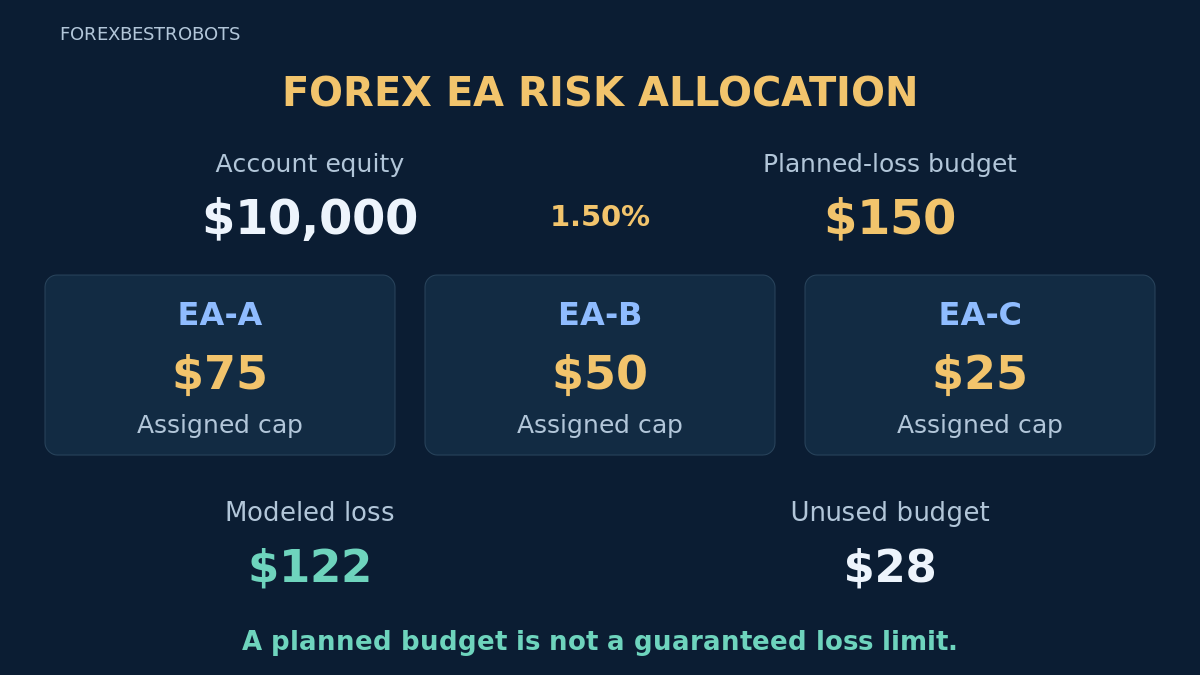
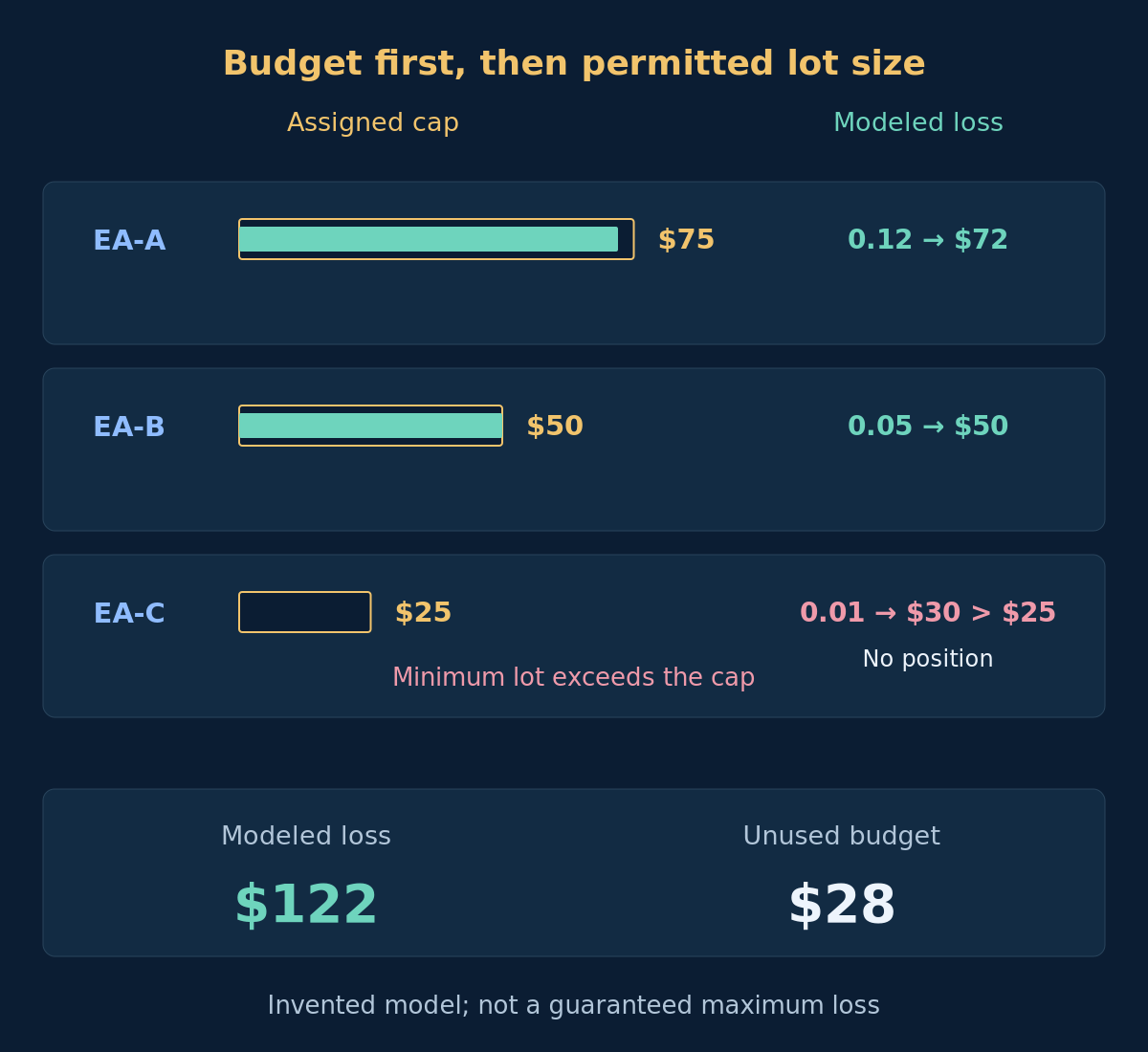
Assume an invented USD account with $10,000 equity. Its teaching policy sets a total planned-loss budget of 1.50%, or $150, divided into $75, $50 and $25 caps. Each EA may hold only one position. Assume a 0.01-lot minimum and 0.01-lot step, with loss scaling linearly by volume, including proportional costs.
| System | Assigned cap · USD | Modeled loss per lot · USD | Unrounded lots | Permitted position | Modeled loss · USD |
|---|---|---|---|---|---|
| EA-A | $75 | $600 | 0.1250 | 0.12 | $72 |
| EA-B | $50 | $1,000 | 0.0500 | 0.05 | $50 |
| EA-C | $25 | $3,000 | ≈ 0.0083 | Not opened | $0 |
Round down to a permitted volume that remains within its cap. EA-C cannot use the minimum lot: it would model $30 against a $25 cap, so it stays out. The modeled total is $72 + $50 + $0 = $122, leaving $150 − $122 = $28 unused. Do not round up or automatically reassign that room. Fixed ticket charges or nonlinear costs require recalculation after sizing.
Optional: reproduce the lot calculation
EA-A: 75 / 600 = 0.1250, reduced to 0.12 × 600 = $72. EA-B: 50 / 1,000 = 0.0500, giving 0.05 × 1,000 = $50. EA-C: 25 / 3,000 ≈ 0.0083, below the minimum; 0.01 × 3,000 = $30 exceeds its cap. No zero-volume order is sent. Decimal points and thousands commas follow English numeric notation.
4. Enforce the account limit before orders compete
Each EA must not independently treat the full account budget as its own. The entry process needs a shared, current view of existing positions, pending commitments and reserved capacity for orders in flight. Otherwise simultaneous requests can each pass an outdated check and collectively exceed the budget. Verify the effective trade-attribution scope.
Check both individual caps and aggregate exposure, plus margin and the common-shock cases from the portfolio guide. Unused risk room is not free margin, and a stress estimate is not a hard loss ceiling. If quotes, costs, order status or attribution are stale or unknown, the policy must specify how new exposure is blocked rather than assumed safe.
5. Define the drawdown reference before a breach
Use marked account equity, including open P/L and charges, on a stated clock. Define the high-water mark, observation frequency and scope. In a no-flow period, percentage drawdown is the fall from the preceding equity peak divided by that peak. Cash deposits and withdrawals require a documented flow-consistent method; a deposit must not manufacture performance recovery.
Separate a monitoring trigger from an instruction to close positions. State whether a breach is checked continuously, on each available update or at a scheduled review, and what happens when the monitor is unavailable. A historical drawdown number does not identify a universally safe trigger.
6. Read the trigger example without assuming a fill
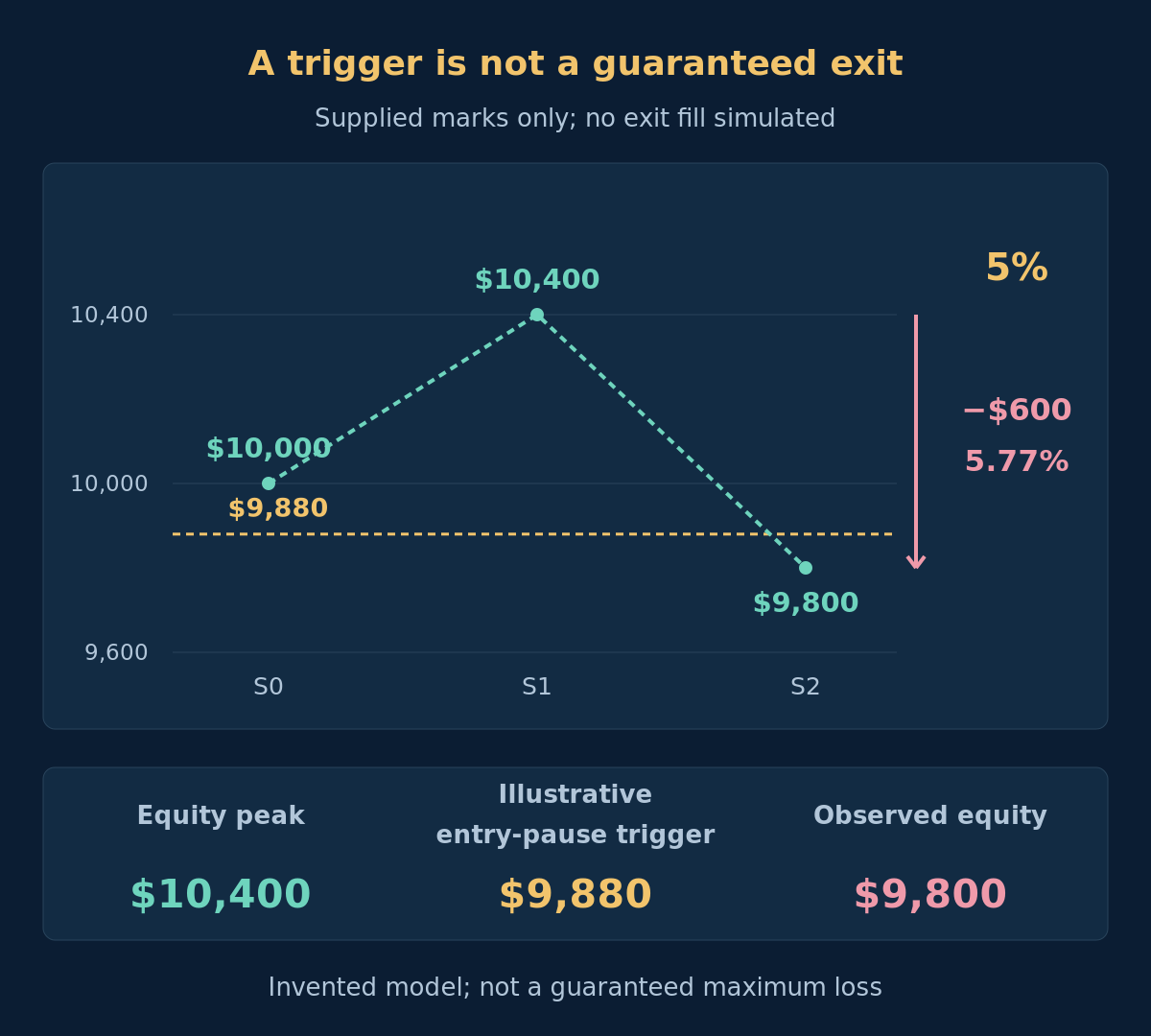
In a separate invented account path with no cash flows, the supplied marks are $10,000, $10,400 and $9,800. A predeclared entry-pause trigger of 5% from the current peak gives $10,400 × 0.95 = $9,880. At S2 the measured drawdown is ($10,400 − $9,800) / $10,400 ≈ 5.77%.
| Mark | Equity · USD | Running peak · USD | Observed drawdown |
|---|---|---|---|
| S0 | $10,000 | $10,000 | 0.00% |
| S1 | $10,400 | $10,400 | 0.00% |
| S2 | $9,800 | $10,400 | 5.77% |
The next supplied mark is $80 below the trigger. The observed decline is $600; neither $9,880 nor the threshold guarantees a closing price. The path inside the interval and subsequent exit are unknown. At $9,800, the earlier 1.50% budget rate would produce $147, but that arithmetic does not authorize a restart or validate the rate.
7. Specify what pause actually does
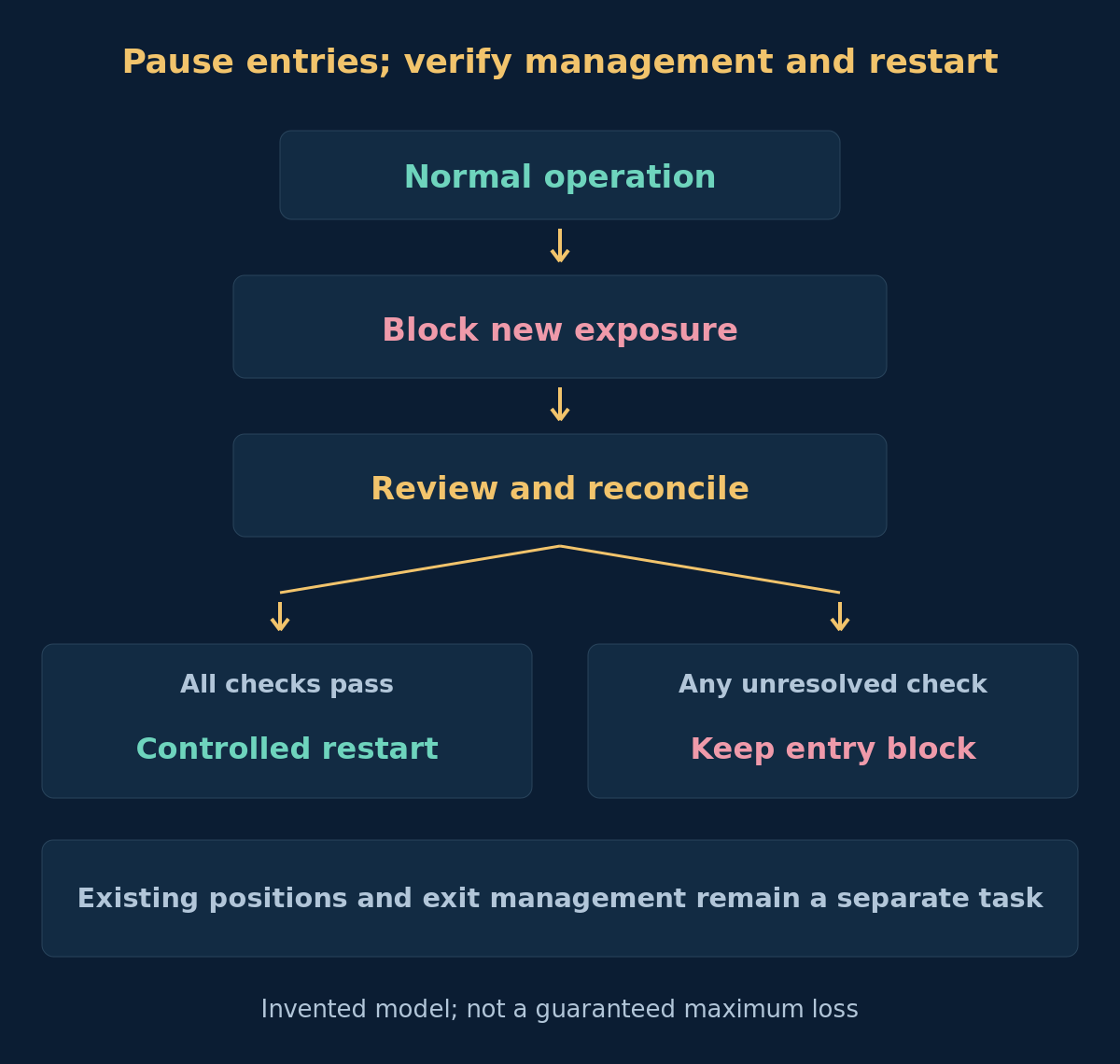
An entry pause should block new exposure, including grid additions and replacement pending orders within scope. Decide explicitly which existing pending orders are cancelled or retained, then verify the broker's order state because a fill may race a cancellation. Existing positions still need a tested exit-management or reduction plan and a responsible operator. Blocking entries does not itself close positions.
MT4's global AutoTrading switch blocks automated trade functions, including EA-driven closing or modification; it is not a selective entry-only control. It does not itself cancel existing orders or close positions. Broker-held stops differ from virtual exits, and terminal trailing stops require the terminal to operate. Verify the actual protection path before using a global switch as part of a pause plan; see monitoring and recovery checks.
8. Make restart a separate decision
A profitable interval, a timer or a fresh deposit does not by itself prove that the problem is resolved. Keep entries blocked until the predefined review is complete. The following gates are a specification to test, not evidence that any current EA implements them.
- Reconcile all positions, pending orders, costs and ownership with fresh broker data.
- Identify the breach cause and verify data, connectivity and the exit-management path.
- Recheck the EA version, settings, currency exposure, lot feasibility and account limits.
- Validate the response and restart sequence in a controlled test, including duplicate-entry prevention.
- Record the review decision, permitted scope and observation plan; keep the block if any gate is unresolved.
Restart only through the documented process. Reducing size may reduce modeled exposure but cannot repair missing evidence or guarantee recovery. Do not reset the high-water mark just to erase a breach; retain the old series and clearly label any newly approved measurement regime.
9. Test allocation and controls together
Use chronological backtesting checks, then controlled forward observation, with the shared capital, limits and costs the deployment will actually use. Freeze candidate rules before later validation. Include correlated losses, gaps, partial fills, failed cancellations, stale data, terminal restarts and simultaneous order requests.
Test that blocking new entries leaves the intended management path available, that settings survive recovery and that a restart cannot duplicate existing exposure. Summing independent backtests is insufficient if shared margin or entry limits change trades. Keep unsuccessful policy variants; do not choose a trigger solely because it produces the prettiest historical curve.
10. Keep a versioned review record
Record the equity basis, budget amounts, loss model, allowed volumes, actual order checks, drawdown reference, trigger, breach evidence, actions and restart decision. Separate planned loss, stress loss and realized or marked outcomes in the record. Reconcile the account after each action rather than treating a sent request as confirmed completion.
Review at predeclared times and after material changes in contract terms, costs, EA behavior or operational dependencies. A change starts a new documented policy version, not a rewritten history. Complete evidence and consistent controls support a review; they do not establish a future profit or maximum loss.
11. Questions about EA risk allocation
Is equal lot size an equal-risk allocation?
No. Contract value, exit distance, direction, costs and simultaneous positions differ. Compare a documented common risk measure, then apply actual volume and account constraints.
Does a drawdown pause guarantee the threshold loss?
No. A trigger is a condition for action, not a guaranteed fill. Observation delays, gaps, execution and remaining exposure can produce larger losses.
Can I turn off AutoTrading and assume the account is protected?
No. That switch blocks automated trade functions, including management actions by EAs. It does not itself flatten the account. Reconcile pending orders and confirm how existing positions will be managed.
Should the unused budget be assigned to the best recent EA?
Not automatically. Unused room may result from lot constraints or missing evidence. Any reassignment needs a documented rule, combined-exposure review and validation; recent profit alone is not enough.
12. Sources and scope
The official MQL4 symbol-properties reference documents lot constraints and contract fields; MQL4 trade permissions explains the global automation restriction; MetaTrader's trailing-stop help distinguishes terminal processing from server-held stops. Sources checked on 2026-10-18. They do not endorse this article's invented budgets or thresholds.
The sizing table and separate drawdown marks are authored teaching examples, not actual EA results, a portfolio recommendation or a supplied risk-control program. All triggers and response gates require implementation-specific validation. No allocation here guarantees profit, a probability of loss or a maximum realized loss.